Nixon News & Notes
Richard Nixon’s Unexpected Second Act: America’s Most Unlikely Internet Political Icon
Young conservatives’ fascination with Richard Nixon is partly ideological, but it is also a story about style, distance, and the internet’s fondness for the unlikely comeback.
For people too young to have lived through Watergate, Nixon arrives less as the cautionary tale their parents remember and more as a complicated, hard-edged political character: hyper-competitive, strategically minded, suspicious of elite institutions, and unafraid to make enemies. In a political culture that prizes combativeness and treats establishment disapproval as a kind of credential, Nixon can read as an early model of the embattled antihero.
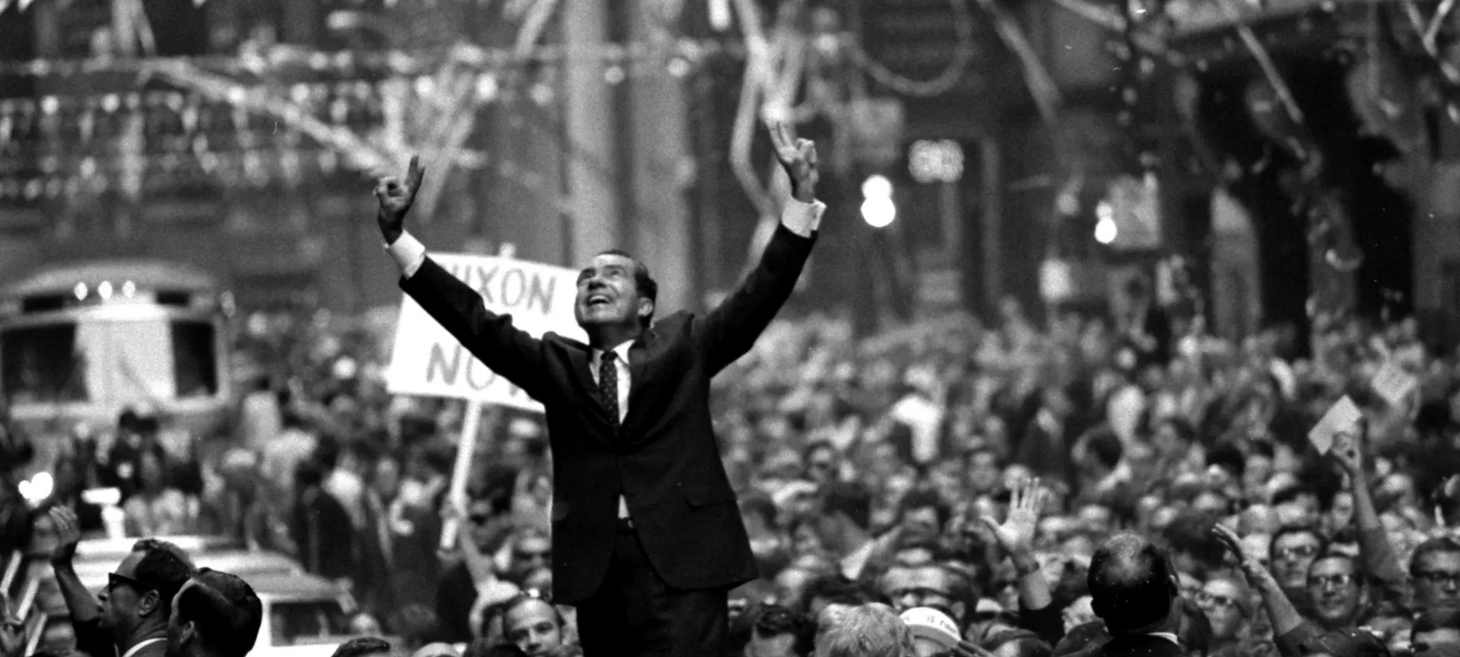
“Nixonmaxxing” turns that impression into a visual language. The Richard Nixon Foundation has circulated slick short-form edits of Nixon walking through crowds, delivering speeches, shaking hands, bowling, and projecting presidential gravity—often cut to contemporary rap music. The point is not a conventional history lesson.
It is to create “aura”: Nixon as a stern, calculating, slightly dangerous-looking statesman, remixed for the same online culture that turns athletes, actors, and fictional villains into mood-board icons.
The merchandise—“Nixon Now More Than Ever,” “Pretty Girls for Nixon,” and sold-out Nixonmaxxing hats—helps make the historical interest feel like a subculture rather than a homework assignment.
There is real substance beneath the meme, too. Nixon was exceptionally intelligent, geopolitically ambitious, and unusually fluent in the mechanics of power. Young conservatives drawn to foreign-policy realism, executive toughness, law-and-order rhetoric, or political strategy can see in him a president who understood that governing meant making difficult tradeoffs, not simply delivering applause lines.
His opening to China, détente with the Soviet Union, and domestic-policy record complicate the simplistic picture of Nixon as merely a conventional modern conservative—which may actually add to his appeal. He feels less like a partisan mascot than a formidable operator from an era when presidents were expected to think several moves ahead.
Nixonmaxxing is best understood as both a genuine reevaluation and a highly effective rebrand: a generation encountering Nixon first as an internet icon, then—perhaps—as a more difficult and consequential historical figure.
The Nixon Revival: why he matters again
Known to many as “Tricky Dick,” Richard Nixon has often had his legacy reduced to the scandal that brought his presidency crashing down: a break-in at the Democratic National Committee headquarters, a criminal cover-up, then his resignation.
Meanwhile, historians have mostly reduced his character to that of an introverted man and a pragmatic operator, juggling a hot war in Vietnam, a Cold War against the Soviets, and an economic war against inflation at home.
But what if his story is far more complicated? Why has J.D. Vance described Nixon as a “new icon” for young conservatives? And why do some Gen Zers now see him as an “America First” populist pioneer?
Join The Spectator in Manhattan on Wednesday 30 September for The Nixon Revival: Why he matters again. Leading historian and columnist Conrad Black, Daniel McCarthy, editor of Modern Age and the architect of Nixonmaxxing, and former Nixon staffer and author of The Real Watergate Scandal Geoff Shepard will reassess the legacy of one of America’s most controversial presidents. The discussion will be hosted by The Spectator’s US editor, Freddy Gray.
Doors will open from 6pm. Discussion starts 7pm. Event ends 8.30pm.
When Nixon went to China
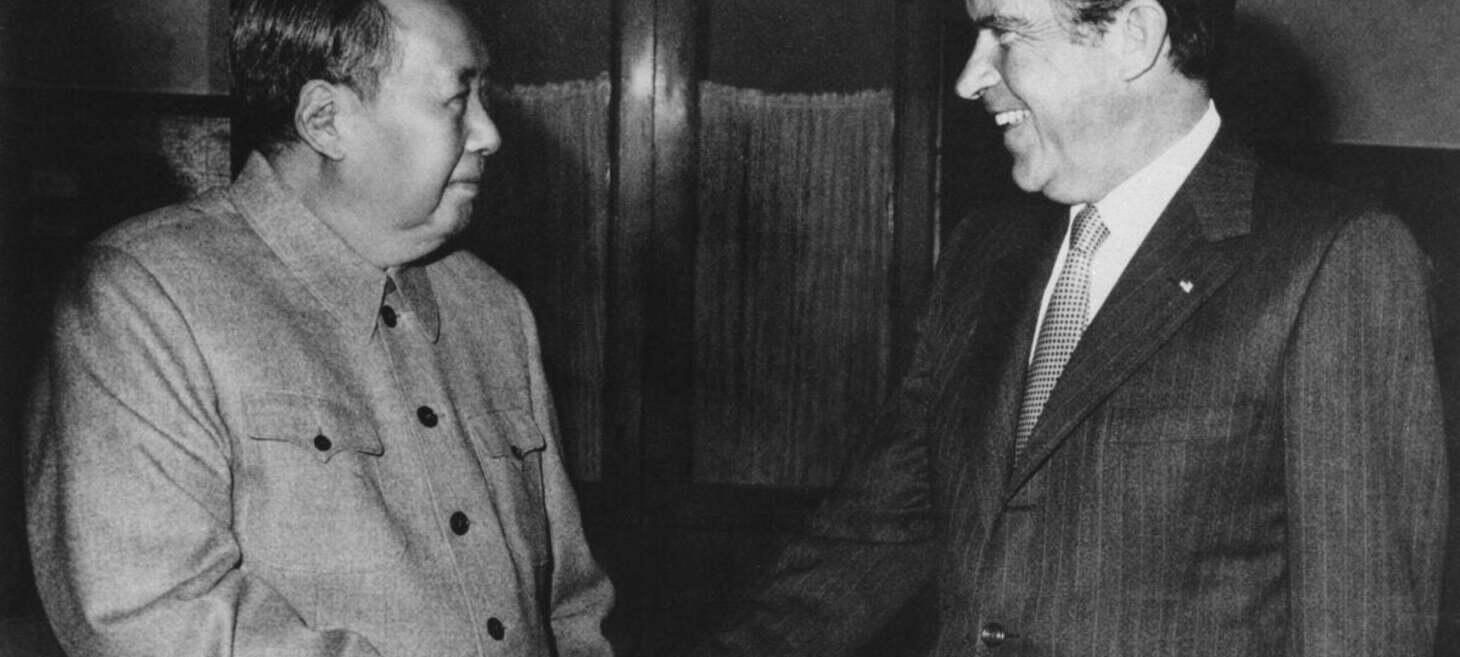
On February 21, 1972, Richard Nixon became the first sitting United States president to set foot in the People’s Republic of China (PRC). Over the course of a week, he met with Communist Party Chairman Mao Zedong, negotiated with Chinese Premier Zhou Enlai, and toured historical and cultural institutions including the Great Wall, the Forbidden City, Shanghai, and Hangzhou. Fifty years after Nixon’s history-making journey, Harvard Law Today turned to two China experts to understand its significance, both then and now. William P. Alford ’77 is the Jerome A. and Joan L. Cohen Professor of Law and director of the East Asian Legal Studies Program. Mark Wu is the Henry L. Stimson Professor of Law. They stress the need to see the trip not only through a U.S.-centric lens and caution that, for all the change it spurred, its full import remains to be seen.