
Nixon News & Notes
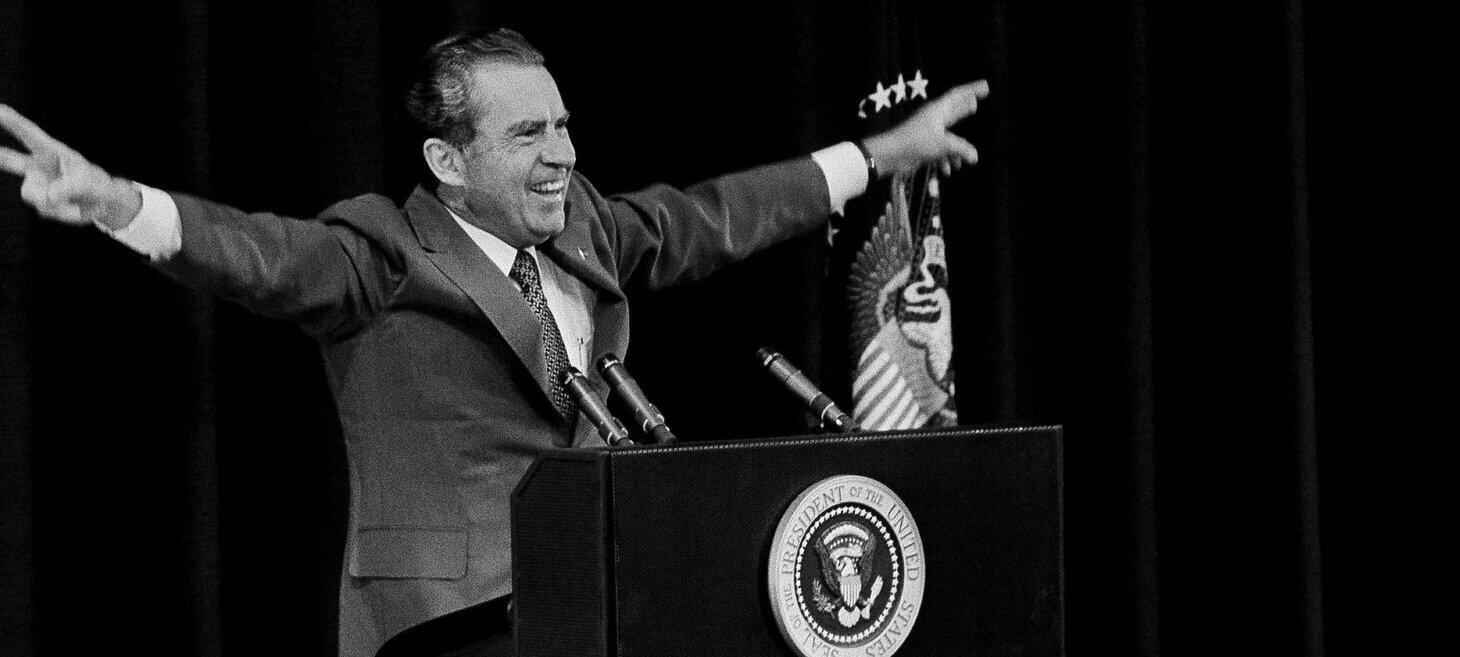
The Rediscovery of a Great American Statesman
Richard Nixon’s claim to greatness rests not on personal perfection but on an extraordinary capacity to grasp the world as it was and act upon it. His opening to China and pursuit of nuclear arms agreements with the Soviet Union demonstrated a quality rarer than ideological consistency: strategic imagination.
A committed anticommunist, he understood that protecting American interests required more than denouncing adversaries; it required exploiting divisions between them and finding arrangements that reduced the danger of catastrophic war. For conservatives who value prudence, national strength, and a sober understanding of human nature, this is statesmanship worth admiring: conviction disciplined by reality rather than sacrificed to it.
At home, Nixon’s strongest legacy challenges the notion that conservative government must choose between institutional passivity and revolutionary upheaval. He appointed conservative Supreme Court justices, ended the military draft, and created the Environmental Protection Agency—a combination that makes more sense when understood as practical nation-building rather than doctrinal improvisation. His administration could defend order while recognizing that government had legitimate responsibilities, including the protection of the natural inheritance.
The sympathetic case for Nixon is therefore not that every decision was correct, but that he possessed the breadth to govern a complicated country rather than merely gratify one faction within it.
His personal story also supplies a powerful source of admiration: the son of a grocer and service-station owner rose through relentless effort to the presidency, enduring defeats that might have ended a less tenacious political life. That trajectory helps explain why his renewed appeal on parts of the right carries an emotional force beyond any particular policy.
A recent account of his revival among younger conservatives identifies resilience, combativeness, and foreign-policy realism as central attractions. For admirers elsewhere who share those priorities, the appeal is readily intelligible: Nixon represents the possibility that seriousness and endurance can outlast fashionable contempt. That is a reason to welcome his reconsideration, although it is not evidence of a uniform conservative resurgence across the globe.
The most intellectually credible pleasure in Nixon’s rehabilitation, however, comes from recovering a consequential president—not from pretending that Watergate was inconsequential. His involvement in the cover-up was real, and conservative respect for constitutional government should make that failure impossible to dismiss. Yet neither must the failure erase the achievements. To call Nixon a great man and president is most defensible when “great” describes historical stature, formidable ability, and substantial accomplishment rather than moral innocence.
The joy of reconsidering him can lie precisely in that mature distinction: refusing both uncritical hero worship and the equally impoverished belief that a fallen leader has nothing left to teach